Become a Founder Alapító leszek
HU EN

Home

Build Your Own Yurt.
Live Free.

Learn yurt building from the man who lives in one — off-grid, year-round, for 8 years.

Barna Páli · Yurt maker for 15 years · 8 years off-grid in a yurt he built himself

15

Years making yurts

8

Years living off-grid

6

Yurt sizes taught

You are more than a mortgage.

Maybe you feel it too: the four walls you pay for your whole life can feel more like a cage than a home. That freedom, closeness to nature, and a home built with your own hands aren’t a luxury, they’re a necessity. The good news: you don’t need a huge mortgage to have a home of your own.

Why this school is different

Ancient form, modern method

A shape perfected over a thousand years, built with today’s tools and materials.

Off-grid, small-machine method

Democratic yurt making: you don’t need a factory, just the right method and affordable, hobby-grade tools.

Dimensional accuracy, guaranteed

Production-grade precision on your very first build, down to the last screw.

I don’t just teach it. I live it.
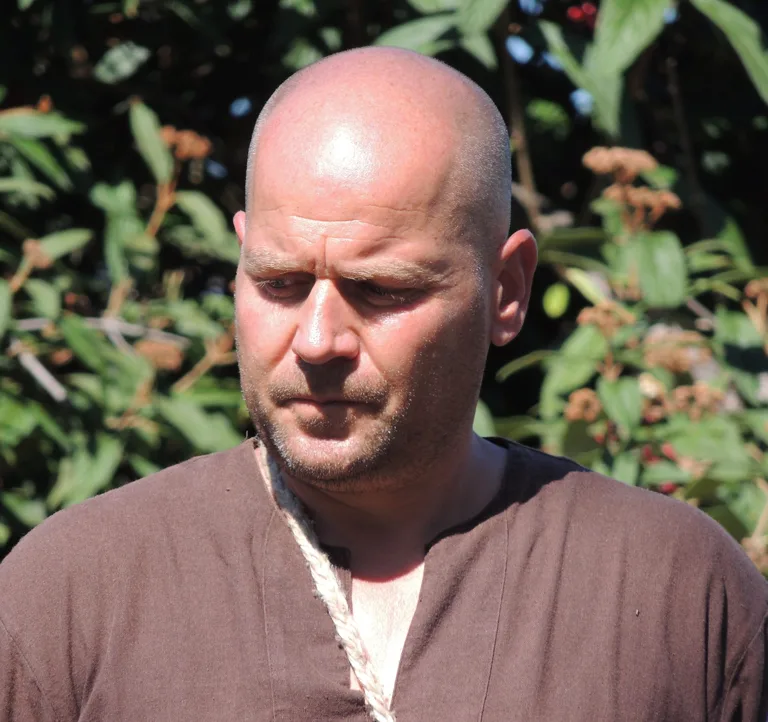
Barna Páli, yurt maker and mentor

I’ve been building yurts for 15 years, and for the last 8 I’ve lived in my own, off-grid, summer and winter. On a 6-hectare estate with woodland, fruit trees, horses and a standalone solar system. I don’t speak about yurts as a hobby: this is my home, in every season.

Let me tell you something I don’t often say out loud. A few years ago I came up with a new insulation: I laminated cork, rock wool and a heat-reflective lining together. In my head it was perfect, and others agreed. I actually manufactured it, and over a full season I built eight to ten yurts with it. And it worked, right up until it had to be taken apart. Because it turned out to be fragile: the cork tears, the rock wool crumbles. One move, and it was damaged.

I retired that technique, and to this day I count it as a failure, because it chipped away at the very thing I hold most sacred in a yurt: that you can take it apart and rebuild it easily, without harm. A yurt is a yurt precisely because you can carry it with you.

That is why I build the way I build today. I don’t know what you need to avoid because I read about it. I know because I did it myself, and learned it the hard way.

Behind me stand more than 20 years: the Sárkánylovas (Dragon Rider) association, the years of experimental archaeology, my own village of 7 yurts.

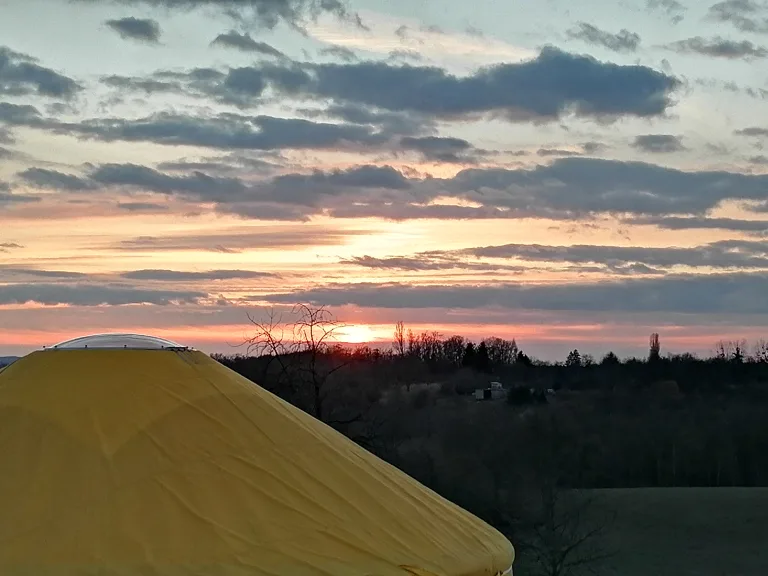
Everything changed in 2008. I was an IT entrepreneur with my own chain of shops, until I bought my first horses. I was given a wild, rubbish-strewn patch of land: I founded an association, cleared it with a grant, and turned the horses loose on it. That first evening, after the long work, I milked a goat and drank its milk. There, in that quiet, I understood how simple life could be. Within months I wound down the company and set out toward self-sufficiency. That sunset, that goat, those horses turned me onto the path that led, in the end, to yurts.

I’m starting this school because I watch people make the same expensive mistakes I already made. My mission is that you won’t have to. I give you more than a yurt: I give you myself.

There are no student testimonials yet. But there are 20 years standing behind it.
This is a school just starting out, so I’ll be honest: I can’t show you student reviews yet. What I can show you is the foundation it’s built on: more than 15 years and several dozen yurts made in every size (5-10 m), 8 years of off-grid yurt living, a village of 7 yurts, and the more than 20-year Sárkánylovas (Dragon Rider) tradition with its years of experimental archaeology. For years I’ve developed my method myself: my early, self-made SIP panel gave way to a better PUR panel, and the foundation rests on ground screws, no heavy machinery. I don’t make promises; I show you what I do.

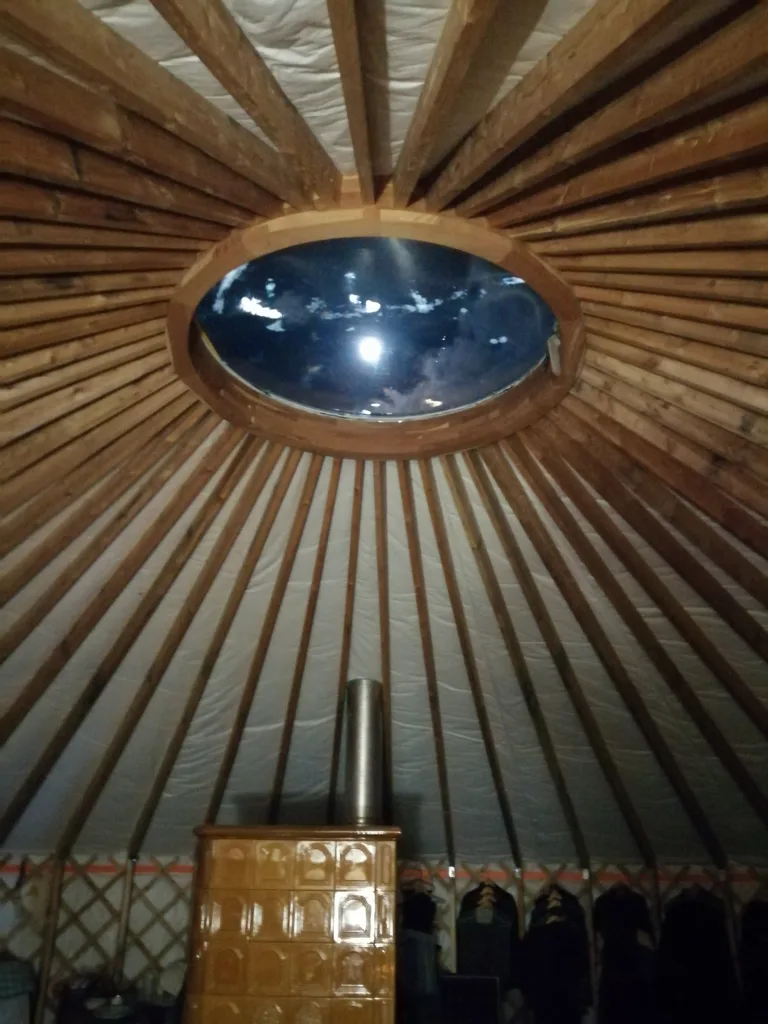
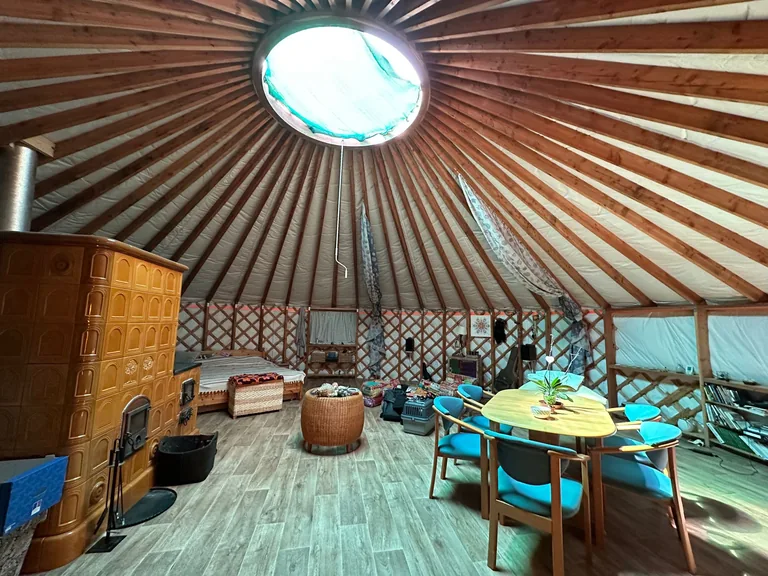
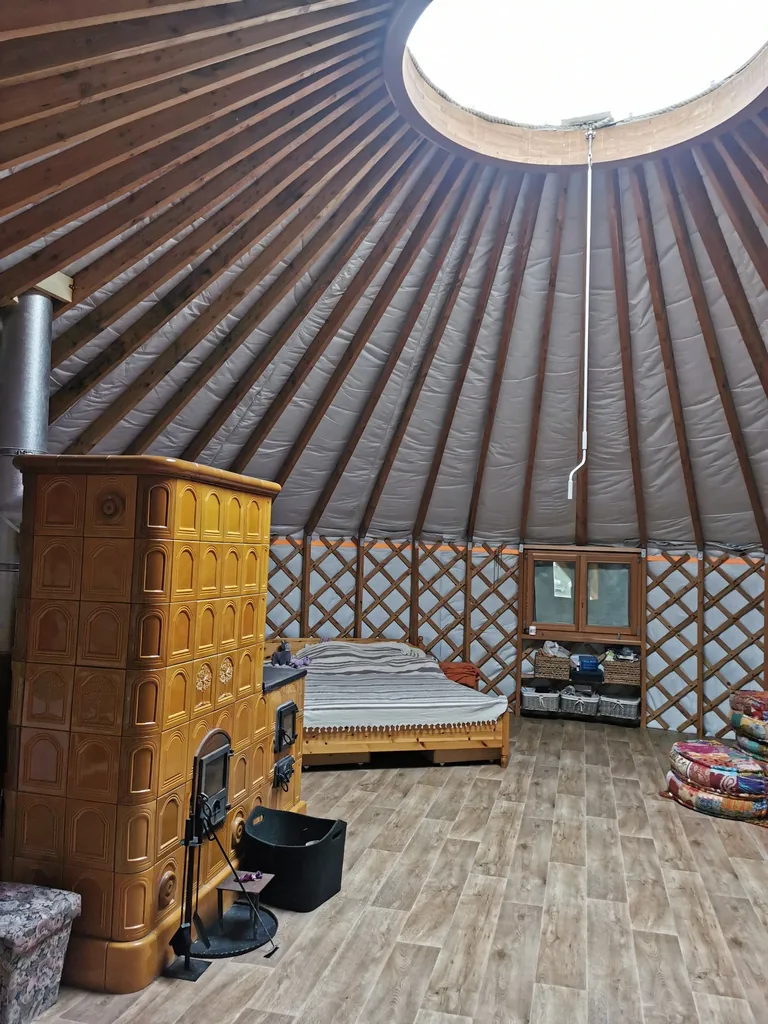
The warm interior of Barna's own yurt: the tiled stove glowing under the wooden crown ring and roof window, cold outside and warm inside

Outside it is freezing. Inside, the masonry stove and the timber crown ring hold the warmth.

This is what it looks like in real life

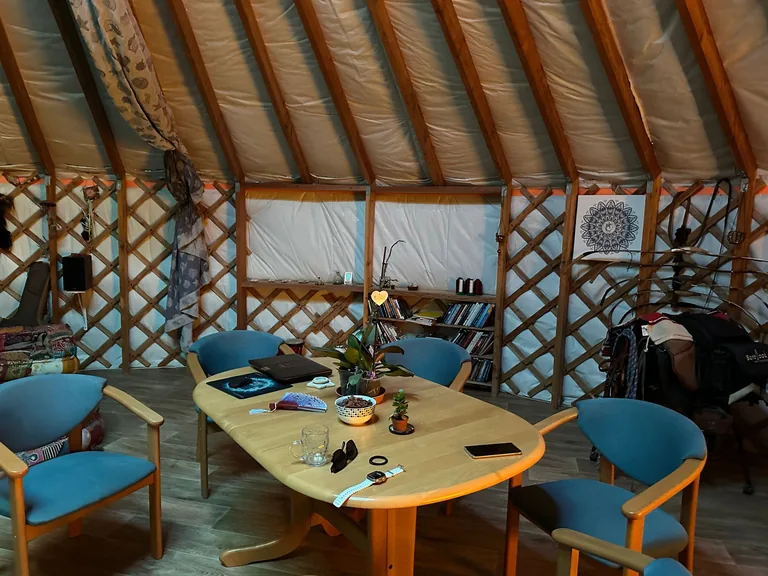
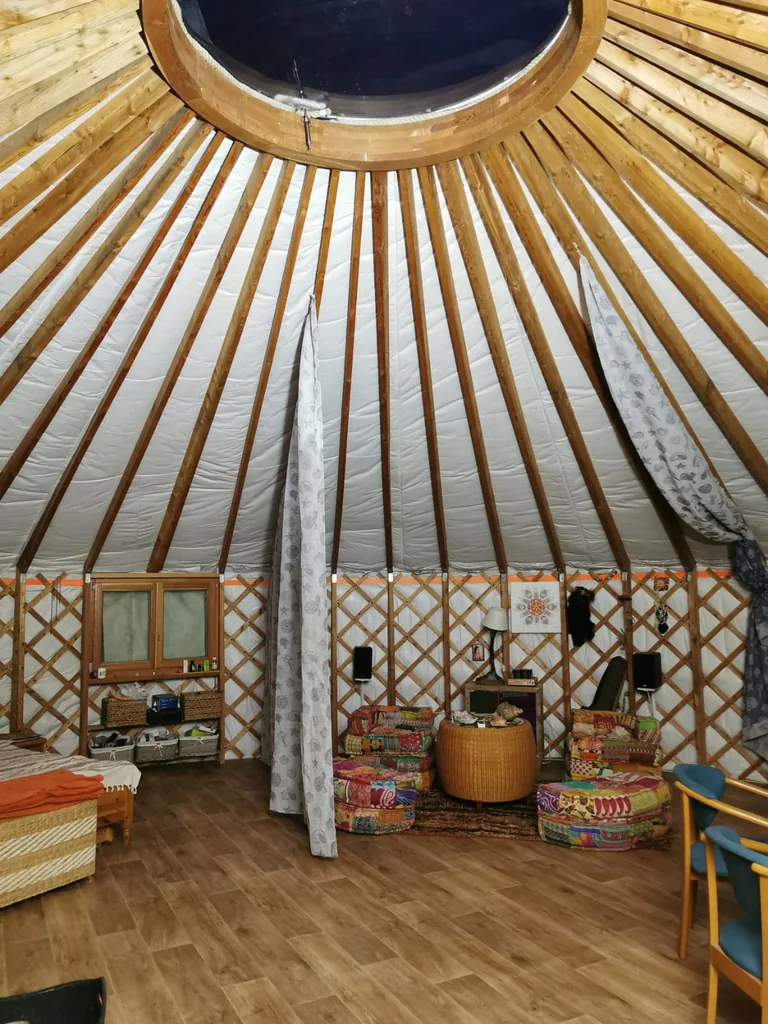
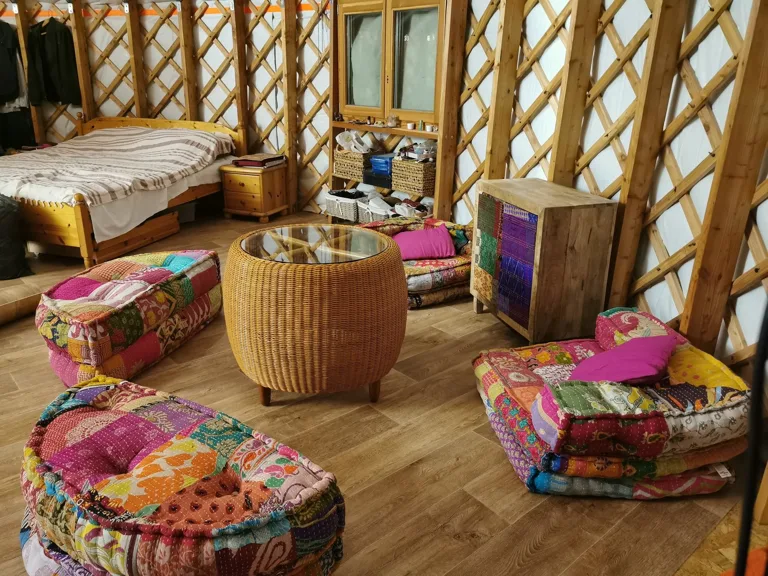
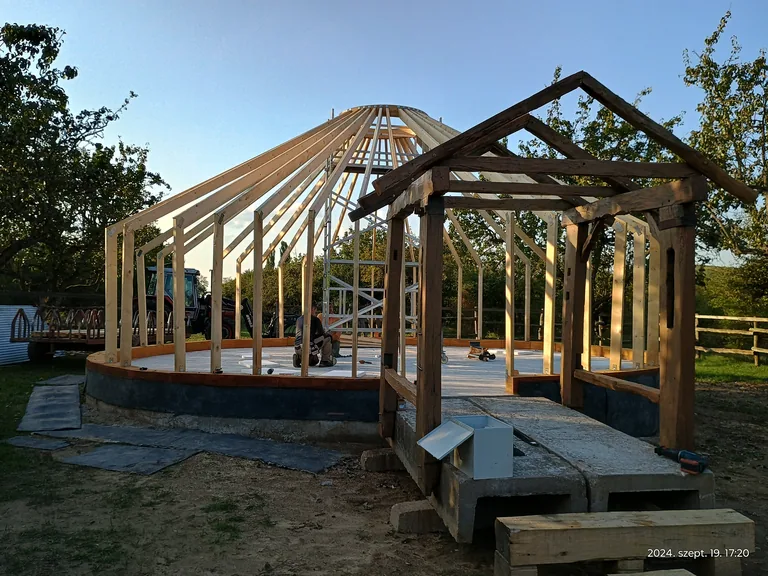
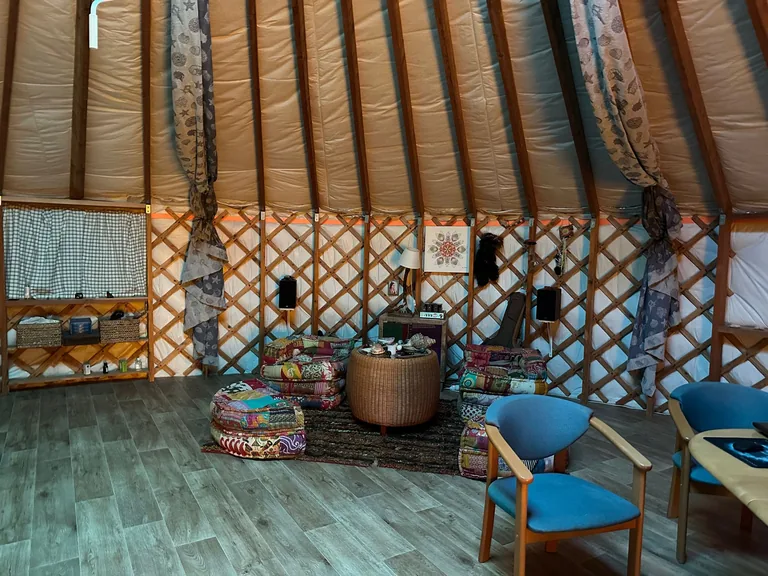
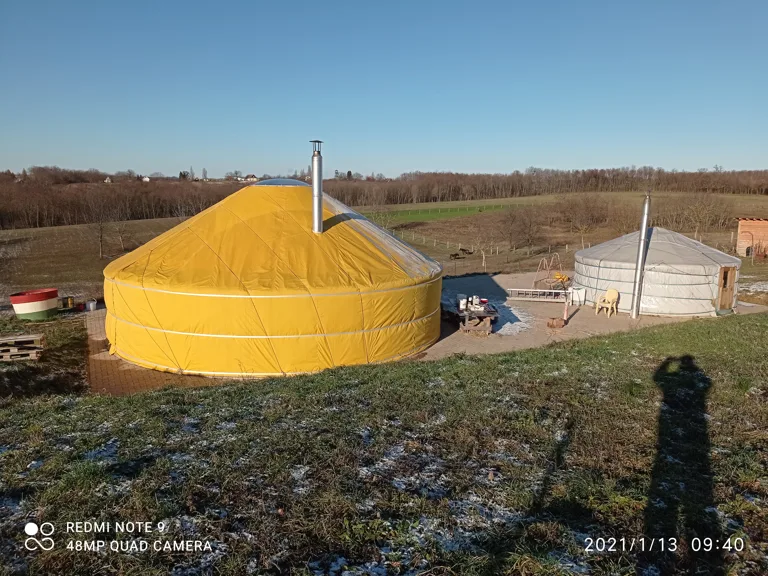
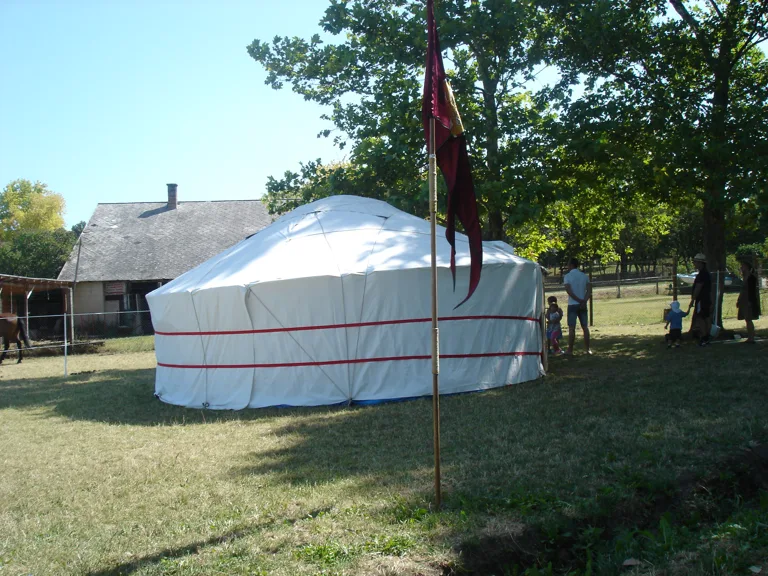
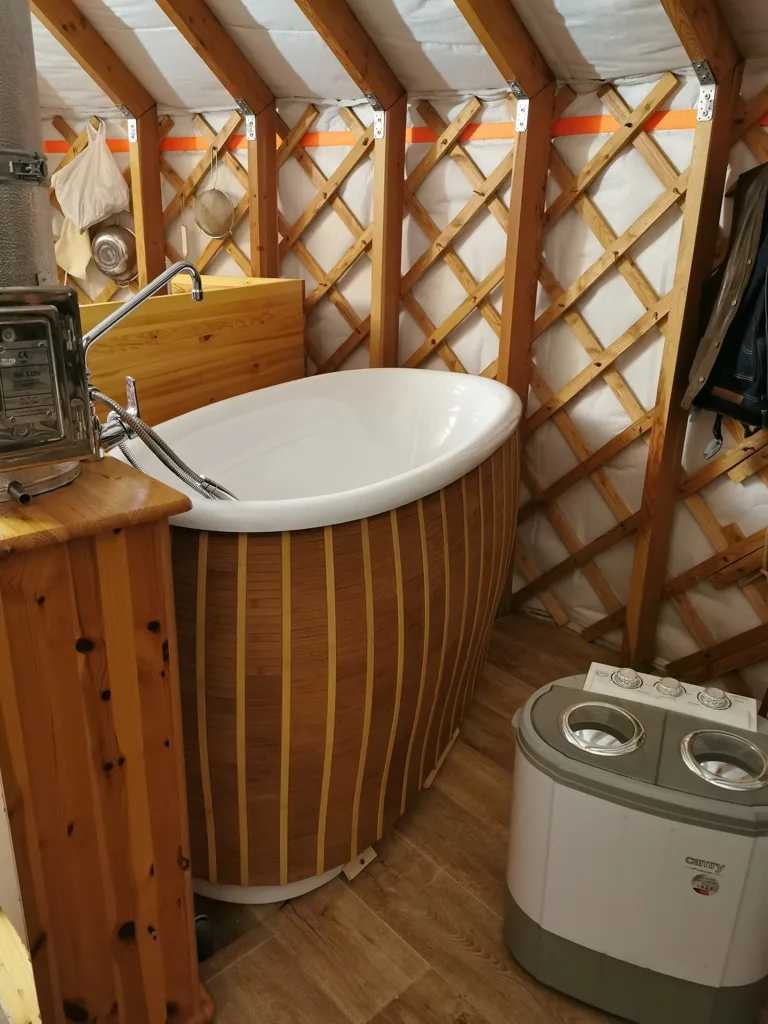
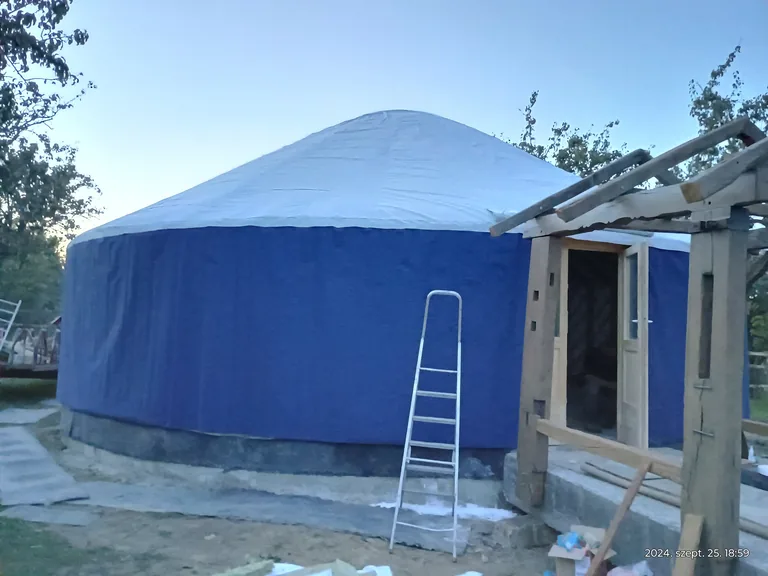
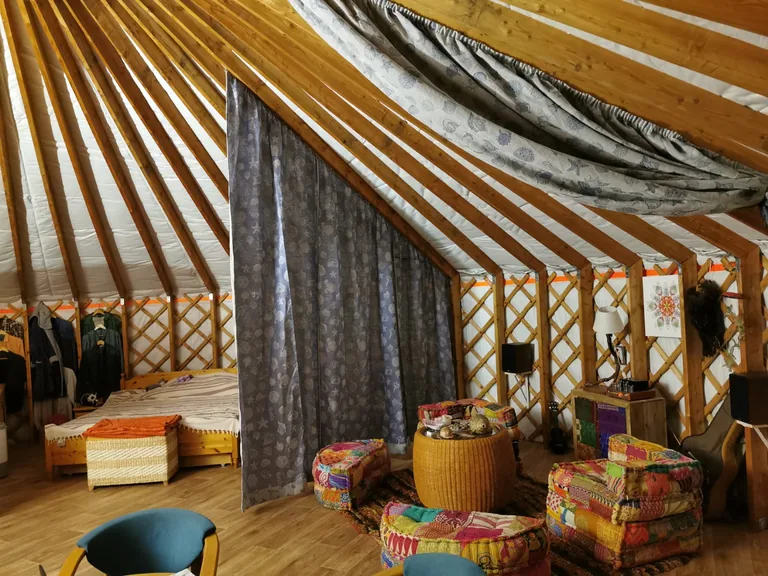
Real photos of the yurts I built with my own hands, and of the life inside them. The furnished interiors show my own 80 m² yurt, divided into zones (living area, bedroom, bathroom, tiled stove) by two curtains. The winter shot and the warm interior are the same yurt: cold outside, warm inside.
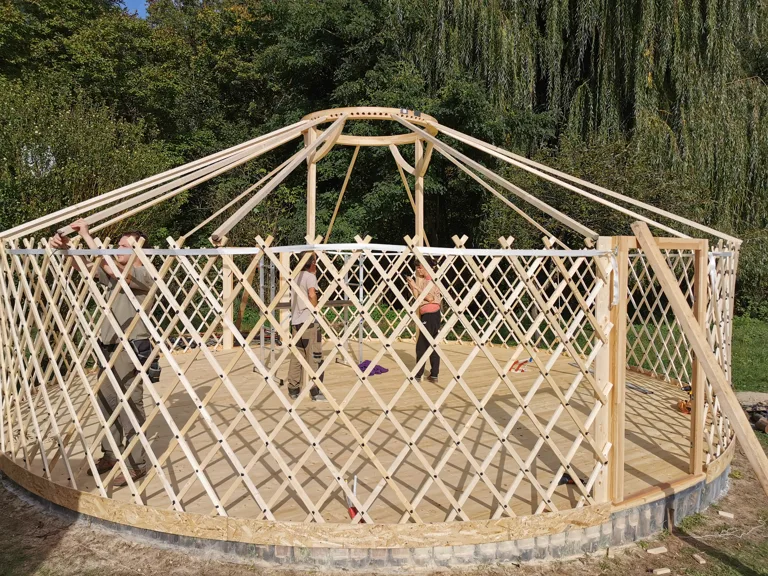
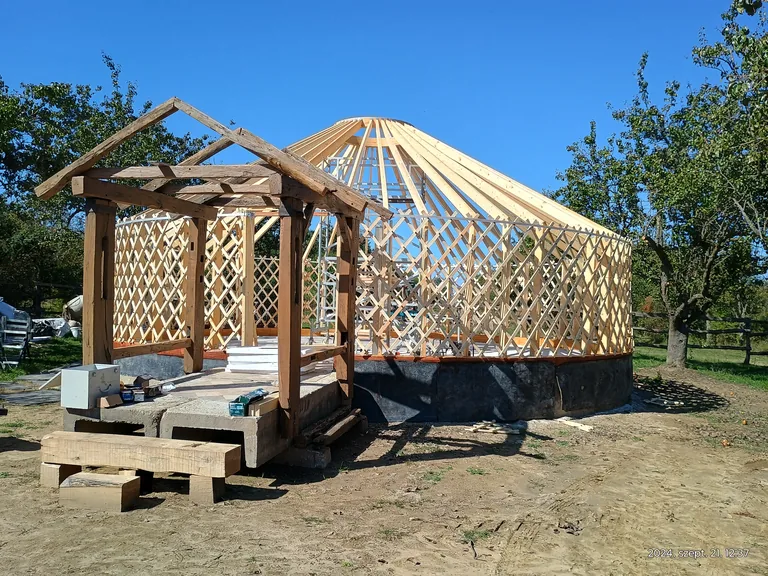
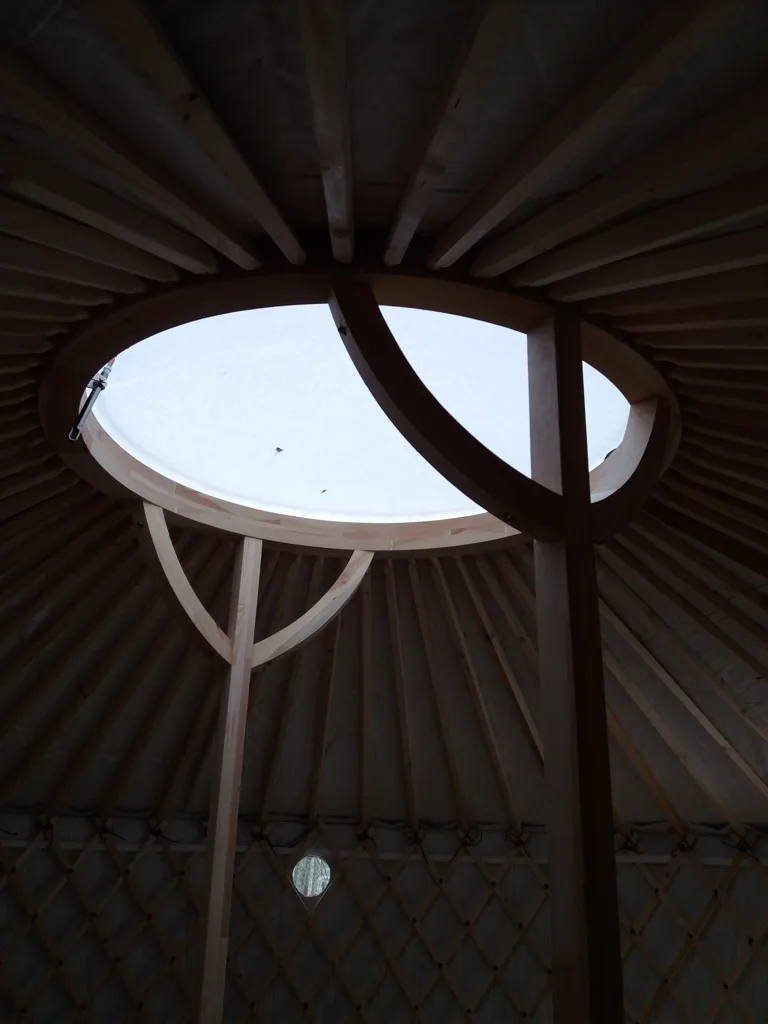
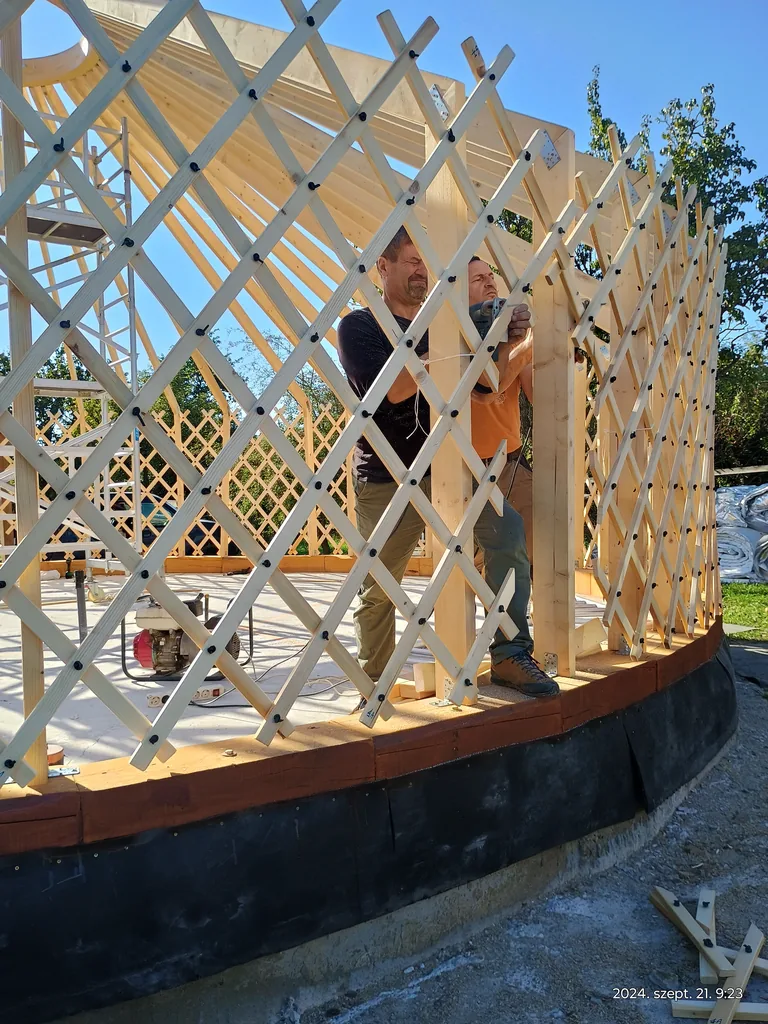
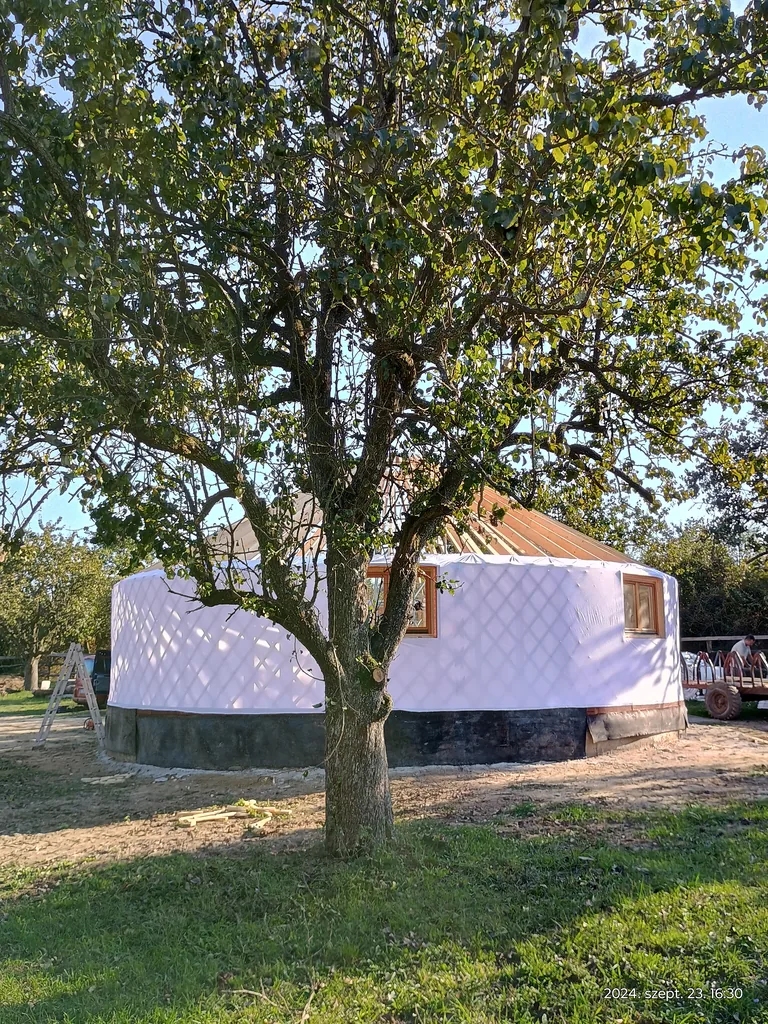
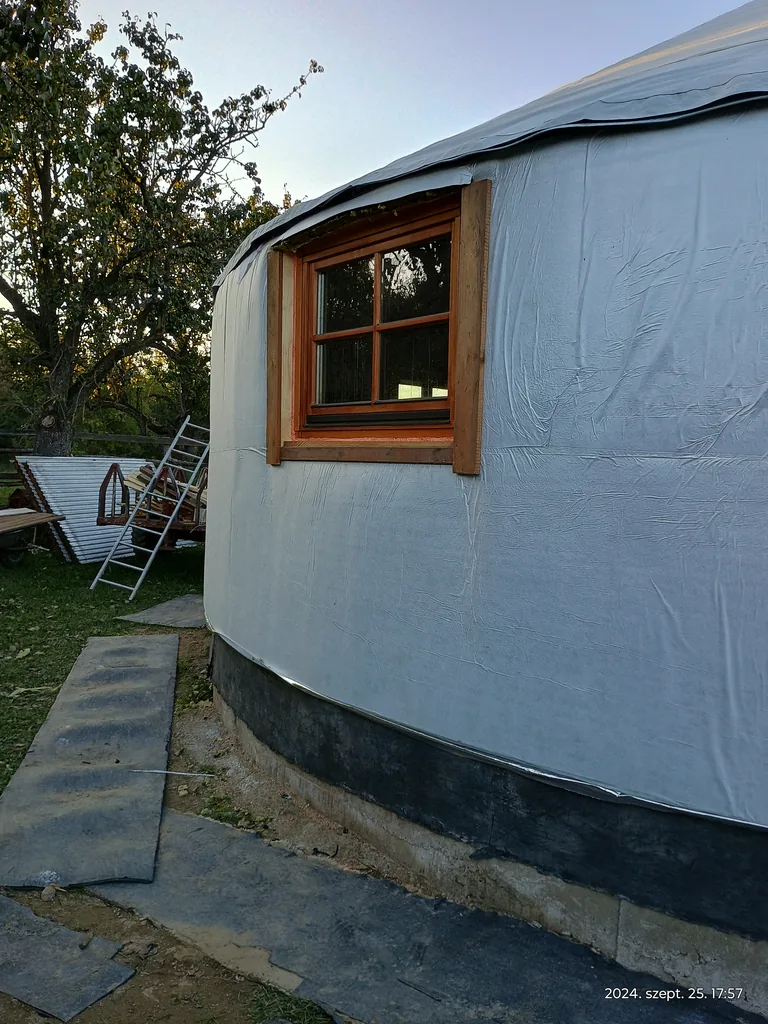
Yurt frame being built: golden-wood lattice wall and roof structure, work in progressThe full wooden frame of the 10-metre yurt on the deck, in sunshine under a blue skyYurt interior structure: oval roof window and crown ring seen from insideThe wooden roof structure and lattice wall of the yurt during construction, two builders inside the frame, blue skyThe warm interior of Barna's own yurt in the evening: the glow of the tiled stove and the roof window, golden-wood lattice wallThe finished white-covered yurt behind a large oak tree, in an orchardFurnished yurt interior: oval wooden table, blue armchairs, mandala wall art and a bookshelf, a homely living roomYurt interior looking up to the wooden crown ring and roof window, with floor cushions on a kilim rug belowThe white covering of the yurt with a wooden-framed roof window, a close detailThe lived-in interior of Barna's own 80 m² yurt: textiles, cushions, a cosy living areaThe golden wooden frame and covered entrance of the 10-metre yurt on the deck, in evening lightCosy yurt interior: colourful kilim rug, floor cushions, a woven side table and blue armchairs in front of the lattice wallBarna's own hand-built 10-metre yurt in winter, in a snowy landscape under a blue skyYurt interior with a tiled stove and oval roof window, wooden table with blue chairs, a warm living spaceA community gathering with yurtsThe zoned interior of the yurt: bathing corner, golden wood and roof windowThe finished yurt with blue covering, white roof and wooden entrance, at duskZoned yurt interior: a curtain-separated bedroom, woven poufs and a kilim rug in the living areaBarna's own yurt in sunset silhouette, in an off-grid landscape

3 deadly yurt building mistakes that could cost you thousands

The errors I see again and again: how to avoid every one of them.

[MailerLite-bekotes Citrin / Elementor PRO form – D3 licencre var. Most placeholder.]

YMS Registration

Join the founding community

Be among the first yurt makers trained by Yurt Maker School. Founding members get early-bird pricing plus bonus modules and community access.

20 people already waiting

YMS Registration

Frequently asked questions

Building a yurt happens in two stages. Making the components takes about 2 to 3 weeks of focused work (allow up to a month for your first build), and assembling it on the foundation takes roughly 4 to 5 days. That is a 7-metre yurt with one person working full time; larger sizes take a little longer.
You only need affordable, hobby-grade power tools, not professional or industrial machines. Most of them are cordless, and it helps to stay within a single brand so the batteries are interchangeable. Even the largest tool stays in the hobby price range. You do not need a full workshop or a factory.
Building your own yurt costs far less than buying a finished one. The raw materials come to only about 40 to 50 percent of what a finished yurt sells for; the rest of the price is the work you do yourself with the off-grid, small-machine method. Builders often save well over half. The exact figure depends on size, insulation, and finish.
Yes, you can live in a properly insulated yurt year-round, even through winter. I have done it off-grid for 8 years through every season. The key is insulation, heating, and moisture management.
A yurt is a permanent, insulated, load-bearing structure built on a rigid frame, while a tent is a temporary shelter. A yurt can carry snow load, hold heat in winter, and last for decades.